

Client:
National Collaboration for Mental Health (NSPH)
in Västra Götaland and Gothenburg
Services:
workshop, concept development, graphics, UX/UI,
frontend, film production, animation, backend
The purpose of the online training is to support the long-term development of methods and activities for increasing
user influence in healthcare and care for people with mental illness.
Together with NSPH Västra Götaland and Gothenburg, we have developed an online training course in user influence.
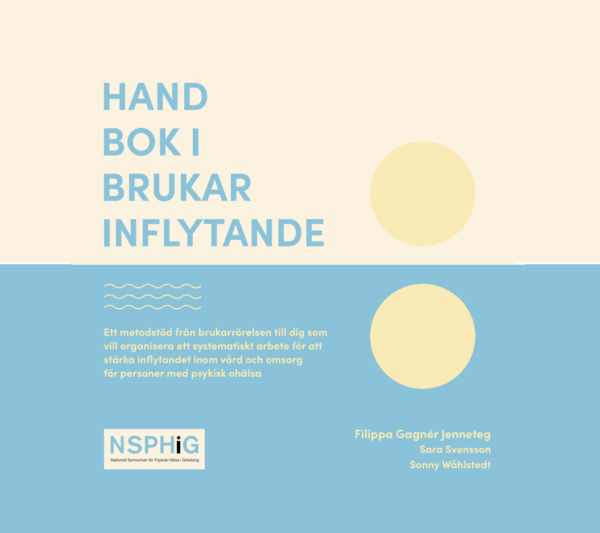
The training course has been developed as a complement and introduction to the "Handbook in User Influence."
Dimh created an animated introductory film for the online training course.
Links:
Introductory film
Take me to the online training course
Visit NSPH in Västra Götaland and Gothenburg nsphvastragotaland.se
UI / UX
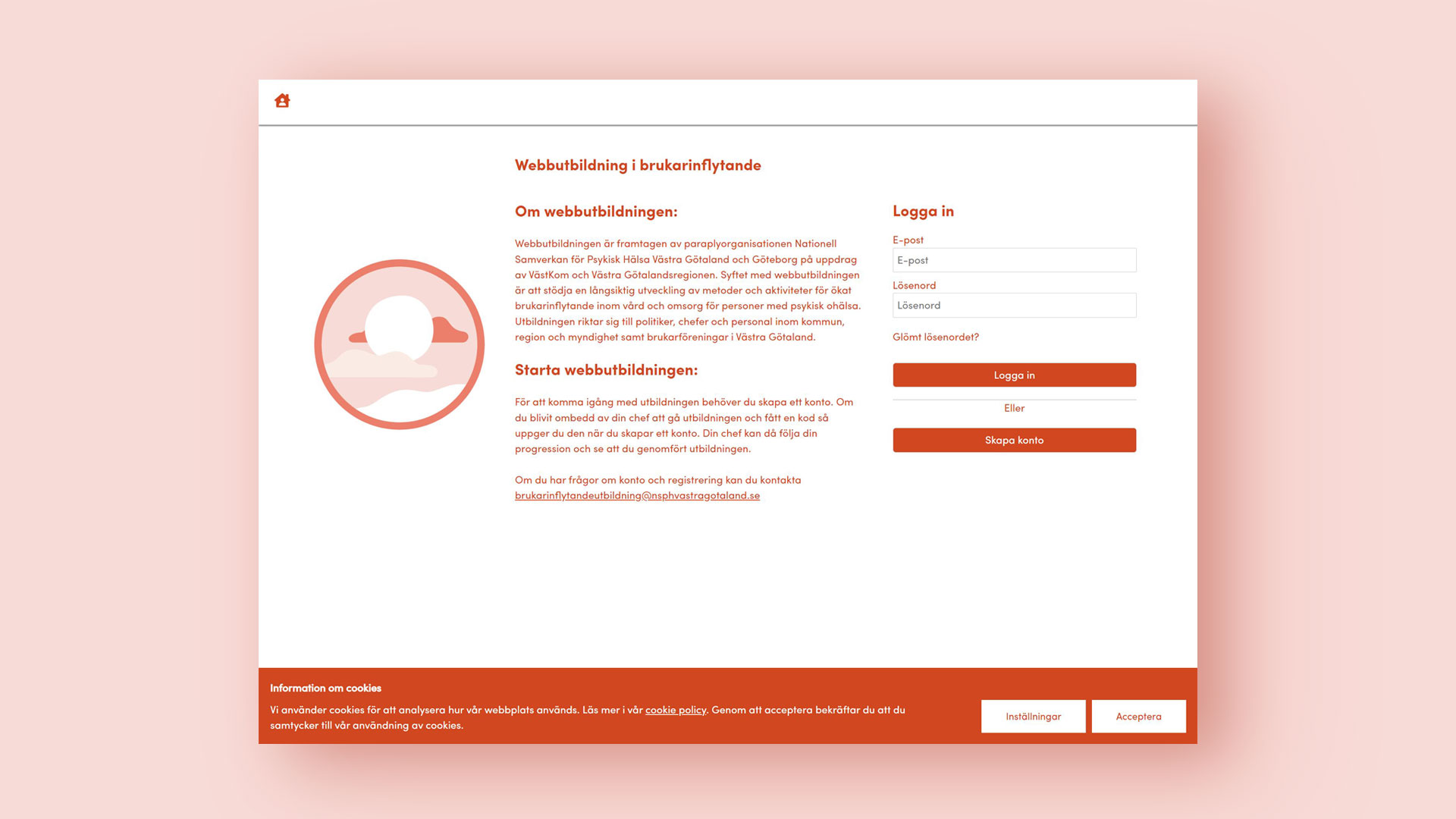
For the customer, it was essential that information was presented clearly and that the content was well structured and easy to navigate. This allowed users to easily understand where they were in the training program and what was expected of them.
Graphics / Icons
The "Handbook on User Influence" came with an established graphic profile. This profile was chosen with the intention of integrating it into the web-based training to create a natural connection and recognition between the two.
However, after careful testing, we realized that certain adjustments to the graphic profile would improve accessibility. Among the elements that underwent changes or were added were text, symbols, colors, and contrasts. These adjustments ensured that the online training became even more user-friendly and accessible to everyone.
Analysis
The online training would complement the "Handbook on User Influence" and not replace the book.
At Dimh, we needed to carefully map out the book, the organization, and how to best supplement the information that was available.
Workshop
What are the target groups, needs, and effects?
These were some of the questions we brought with us to an initial workshop.
Needs & effects - By creating personas, we were able to work together to create a user journey to identify needs and effects from the selected target groups.
Priorities - There are always lots of good ideas, but which ones should we prioritize?
Through voting and identifying risks, we were able to choose what would be included in the first iteration and in the concept development for an initial test with the target groups.
Co-creation - How do we create consensus on how we
want it to look?
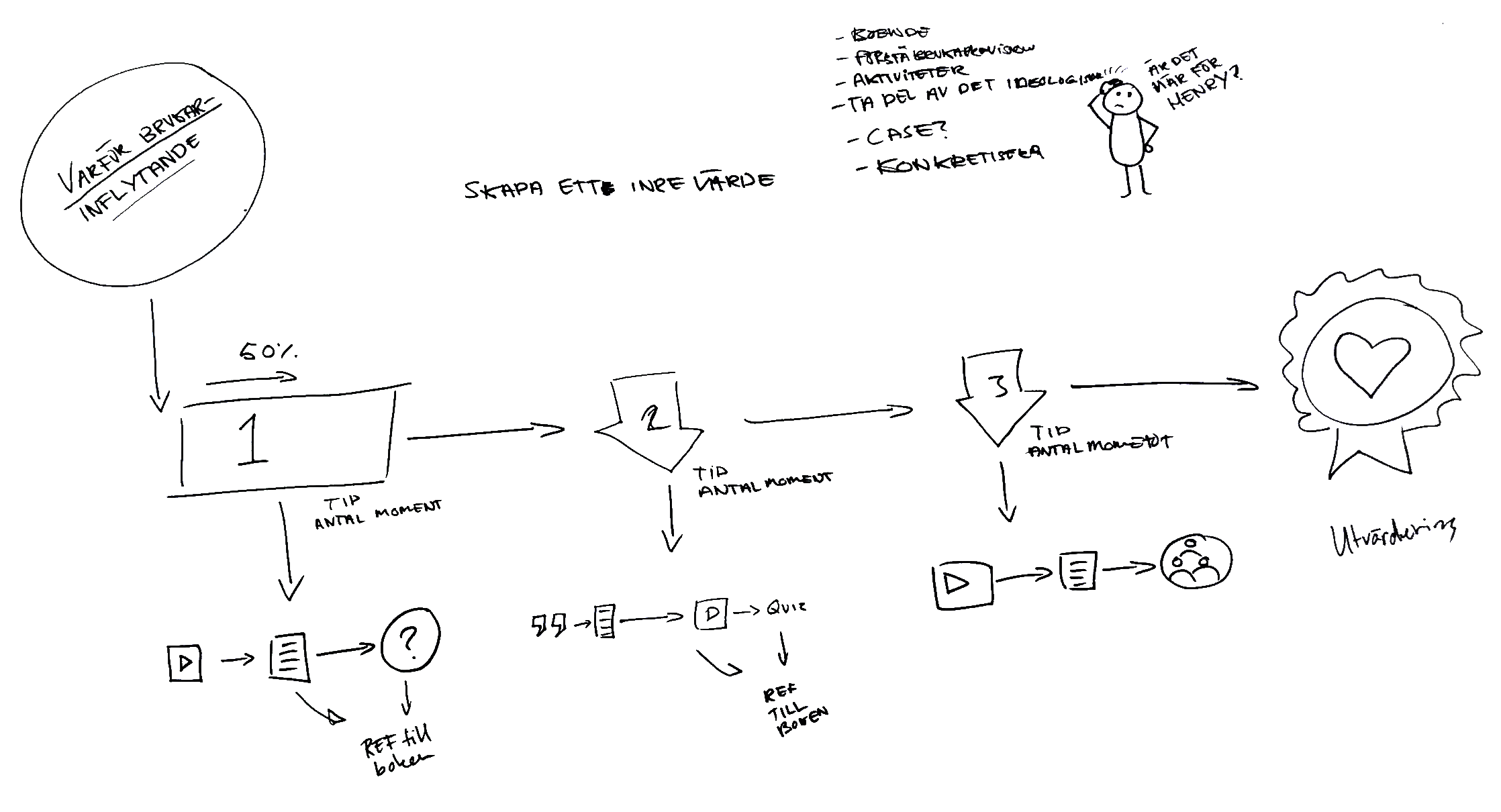
Through co-creation, we created simple paper prototypes to illustrate how the different personas navigate through the online training.
This helped us identify various obstacles and opportunities that may arise.
Concept & prototype
Based on the insights and analyses we made early on in the project together with experts, we began brainstorming ideas for the online training course. Dimh needed to inform and define how we would jointly meet any legal requirements regarding accessibility (WCAG, DOS Act), for example. A basic concept with fundamental requirements was developed, and then an initial prototype could be presented and tested by various individuals from the target group.
Four educational paths
Training path A - aimed at individuals with strategic responsibility for development work within an entire area of activity in a municipality, region, or authority.
Training path B - aimed at individuals with operational responsibility for development work at a specific activity/unit within a municipality, region, or authority.
Training path C - aimed at staff groups within healthcare and social care for people with mental ill health.
Training path D - aimed at representatives of an association, user organization, or similar network of people with personal or family experience of mental ill health.
Contents
All courses have a similar basic structure with different content based on the educational path you have chosen.
Each chapter contains a number of lessons and ends with reflection questions. As support, you will have access to a checklist that can be used during the course.
The training offers different formats (text, voice, images, video, animation) to accommodate different ways of absorbing information.
Categories:
Introduction – An introduction to the online training course.
User influence – Contains lessons explaining what user influence is and how it is used.
Activities – Lessons with suggestions for activities to increase user influence.
Method – Lessons on a methodical approach to increasing user influence.
Target group testing
Target group testing was carried out at the start of the project's concept phase and also during the development phase. We did this to ensure that the guide met the needs and desired effects. We then made adjustments based on the target group's feedback.
For Dimh, this is a very important part of the process. It ensures that we are heading in the right/wrong direction, while also providing a basis for our reasoning when making decisions.
It was extremely important that we included as broad a range of technical expertise as possible in the target group tests. We mainly wanted to see how people with digital challenges, visual impairments, and hearing impairments experienced the prototype.
It was important that the information was clear and that the content was structured and easy to follow, so that you didn't lose track of where you were in the training program
and what was expected of you.
More accessible format
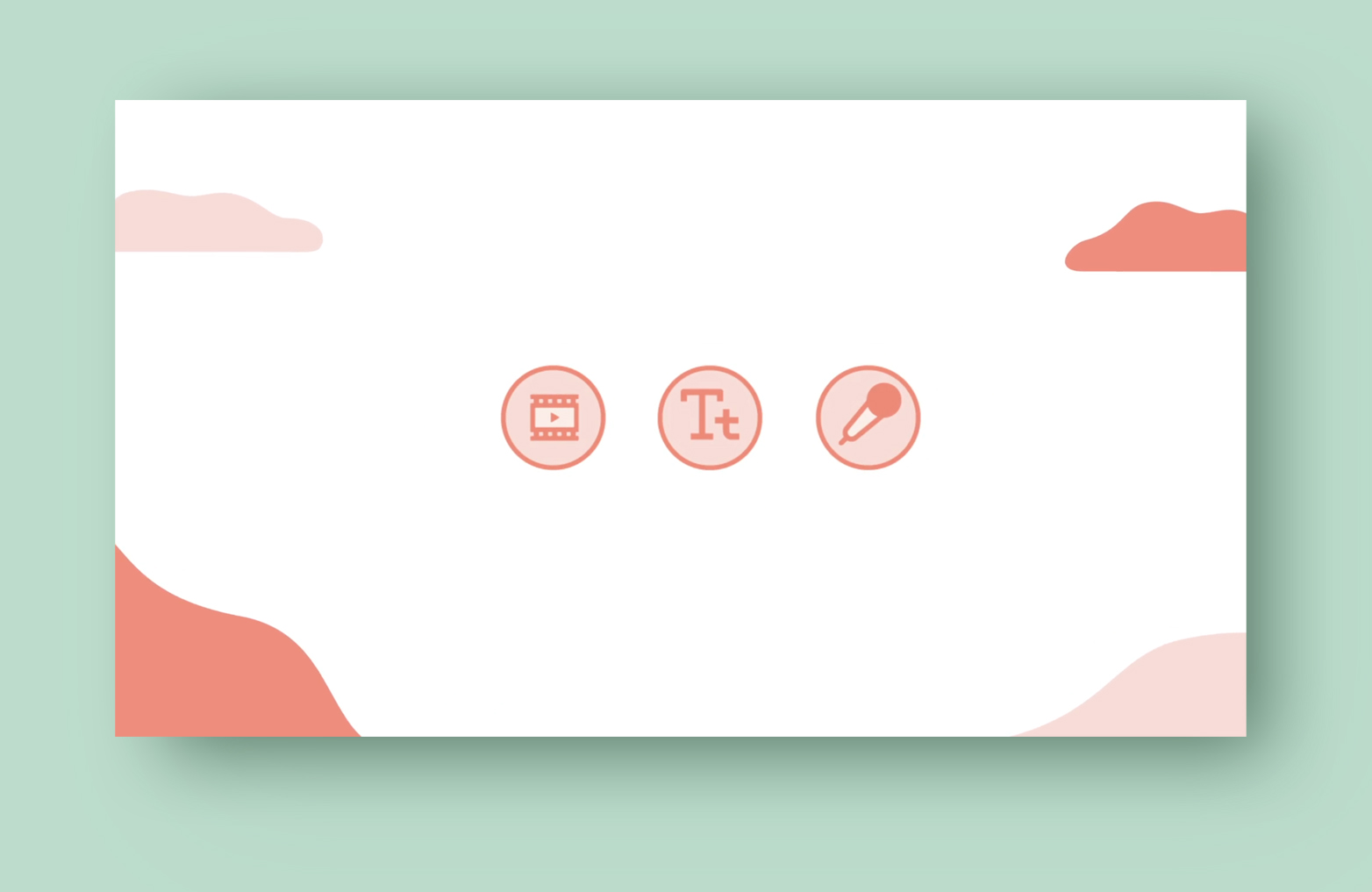
Changes that were confirmed, modified, or added after the target group tests included: voice narration, subtitles, animations, filmed interviews, common discussion questions, and checklists with tasks to help participants move forward in their work.
Animated introductory film
Dimh was not only tasked with designing the online training course, but also with producing an animated introductory film. For us, it was extremely important that the introductory film reflected the existing graphic profile to ensure consistency and recognition. We also wanted the animation to be as accessible as the rest of the educational material.
To give the animation a special touch and make it unique, we at Dimh took the liberty of creating entirely new design elements. This involved developing fresh icons, graphic details, and other visual components that gave the animation its own identity, while also blending in with the overall design. Our hope was that this combination would provide a lively and engaging introduction to the web training, thereby creating a strong first impression for users.

Business development and cooperation
© Dimh 2025. All rights reserved.
